


LogRide - Theme Park Database
PARKWIDE LLC
I came away from LogRide feeling that it is less a simple park companion and more a serious reference tool for people who care about the rides themselves. Its focus is clear: theme parks, roller coasters, haunted attractions, and the details that make a day of riding more interesting. I would recommend it most strongly to enthusiasts who enjoy planning, comparing, and remembering their experiences, rather than to someone who only wants a basic map or a quick list of attractions.
That distinction matters. Many travel apps treat a theme park as one destination with directions, opening information, and a handful of popular attractions. This app approaches the visit from the enthusiast’s side. It gives the rides a central role, which makes it particularly appealing when the fun begins before arriving at the gates and continues after the trip is over.
Why this database feels different from a normal park app
The strongest part of the experience is the way it encourages me to think about a park visit as a collection of individual rides and attractions. Instead of using a general travel app and searching repeatedly for coaster information, I can use a dedicated place built around the theme-park hobby. That narrower purpose makes the app feel more useful for enthusiasts who already know the difference between casually visiting a park and deliberately working through its lineup.
I found the app especially suited to comparison. When I am deciding which park deserves a future trip, I do not only want to know whether it is nearby or popular. I want to understand what kind of experience it offers: whether the attraction list is built around major coasters, family rides, dark rides, or seasonal scares. A focused database helps turn that vague decision into a more organized one.
It is also valuable for building a personal record of the hobby. A normal notes app can hold a list of rides, but it does not provide the same sense of structure. With LogRide, the record is connected to the wider world of parks and attractions rather than sitting as an isolated document. That makes it easier to revisit a trip mentally and decide what belongs on the next itinerary.
Related News

Why WhatsApp Messenger Still Makes Everyday Communication Feel Easy

Jurassic World: The Game Is the Better Dino Tycoon for Strategic Players

Threads in Real Life: Who Should Join, Lurk, or Leave

How SHEIN Turned Shopping Into an Endless Content Feed

How to Make Fortnite Feel Smarter on Mobile

Should You Switch to Microsoft Outlook on Mobile?
One practical tip is to use the app before a visit, not only while standing in the entrance plaza. I would first browse the park or destination at home, identify the attractions that matter most to me, and then create a short priority list. That small preparation step prevents the common problem of spending the first hour wandering, especially in a large park where the most important rides may be spread across different areas.
The app’s identity is also reflected in its audience. PARKWIDE LLC has positioned it for people who take the subject seriously, and the store summary’s emphasis on theme-park fans, coaster enthusiasts, haunt fans, and thrill seekers matches the way it feels in use. It is not trying to be a universal city guide. That specialization is its main advantage over broad travel services.
Planning a day instead of merely browsing attractions
A realistic use case is a weekend trip with friends who have different priorities. One person may want the biggest coaster, another may be interested in haunted attractions, and someone else may prefer a balanced day with less intense rides. I would use the database to gather everyone’s targets before leaving, then separate the must-do attractions from the “if there is time” choices. This makes the conversation more productive than scrolling through a park’s entire website at breakfast.
Gallery
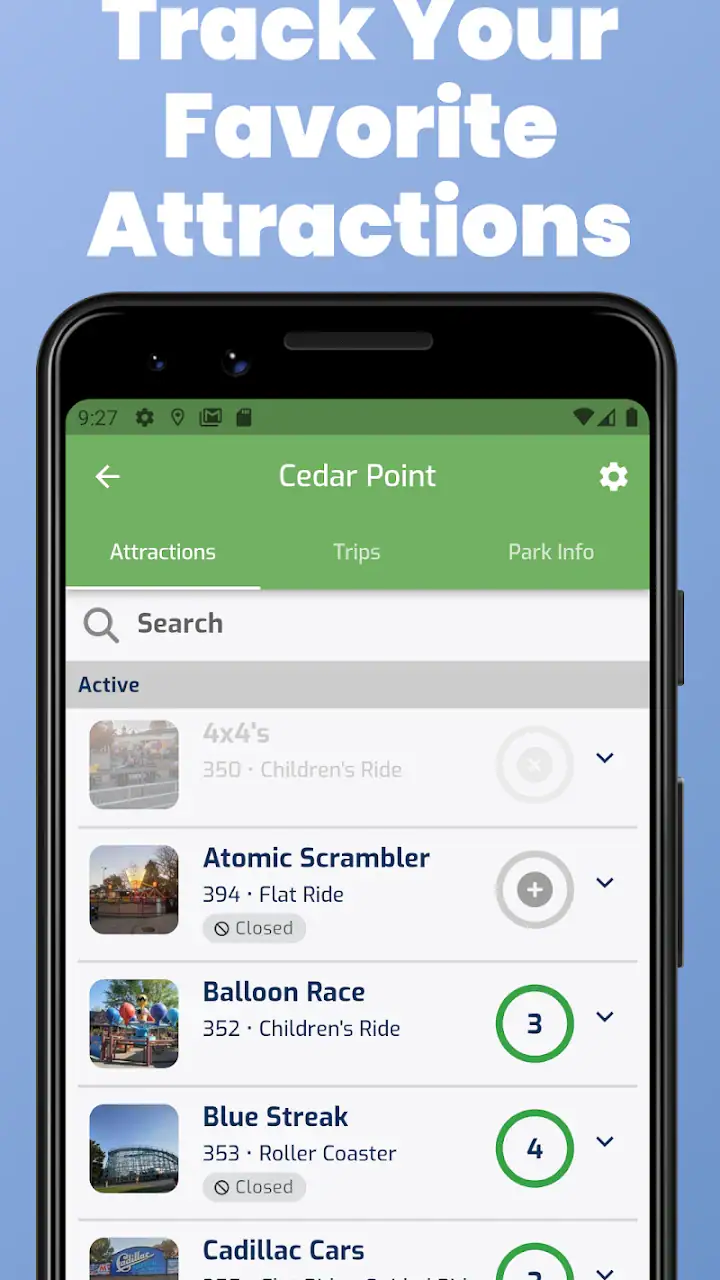
That workflow also helps with return visits. On a first trip, I might simply try to experience as much as possible. On a second visit, I can approach the park with a more deliberate goal: revisit favorites, find attractions I skipped, or focus on a specific type of ride. The app is most rewarding when it becomes part of that ongoing process rather than a one-time download.
Another useful habit is recording impressions soon after leaving an attraction. Memories blur quickly when several rides have similar names or when a full day includes long waits and changing plans. A dedicated ride database gives the hobby a better home than a scattered collection of phone notes. I would still keep the comments concise and personal: what surprised me, whether I would ride again, and whether the attraction lived up to its reputation.
There is a trade-off here. The more seriously I use the app, the more time I need to spend organizing my visit. That is not a flaw for a coaster fan, but it can feel like unnecessary work for a casual guest. Someone who only needs directions to the nearest attraction may find a park’s official app or a standard map faster.
Where it beats official park apps and general travel tools
Official park apps are usually the better choice for immediate operational information inside one destination. They are designed around that park’s own map, queues, announcements, food, and services. I would not replace an official app with LogRide when I need to navigate a sprawling resort or make decisions based on live park conditions.
What this app offers instead is a broader enthusiast perspective. It is useful when the question is not “How do I get to this ride right now?” but “Which attractions should I care about across several parks?” That difference gives it a role alongside an official app rather than necessarily in place of one.
General travel apps have the opposite weakness. They can help with hotels, restaurants, transport, and broad destination planning, but they rarely understand why a rider might travel a long distance for one particular coaster or why a haunt-focused visit deserves a different plan from a family day. LogRide speaks to that motivation directly.
I would use all three types of tools in a larger trip: a travel service for logistics, the park’s own app for live navigation and current conditions, and this database for attraction research and personal planning. Treating it as the enthusiast layer of the trip produces a more useful result than expecting one app to handle every need.
The meaningful limitations I noticed
The same specialization that makes the app appealing can make it feel less welcoming to newcomers. If I already understand the theme-park hobby, the focus is easy to appreciate. If I am planning my first visit and do not know which attractions matter, a large database can create more questions than answers. The app helps me organize interest, but it does not remove the need to make choices.
I also would not rely on it as my only source during a time-sensitive park day. A database can be excellent for identifying attractions and shaping an itinerary, while the official park channel remains more appropriate for current operating details and on-site changes. Keeping those roles separate avoids disappointment when a carefully planned list meets real-world conditions.
There is also a personal discipline issue. A tracking-oriented experience is only as useful as the information I put into it. If I download the app, browse for ten minutes, and never return to record trips or refine plans, its value drops sharply. This is not the kind of tool that proves itself through a single glance; it rewards repeated use.
The free price makes trying it easy, although optional in-app purchases range from less than a dollar to just under ten dollars per item. I would begin without buying anything and decide later whether the additional value fits my habits. For an occasional visitor, paying for extras may not feel necessary. For someone who plans multiple park trips or treats ride history as a serious hobby, the decision is easier to justify.
The age rating is Everyone, which makes the app broadly approachable from a content standpoint. Even so, the practical audience is narrower than that label suggests. Children may enjoy looking at attractions, but the most useful parts are likely to appeal to adults, families, and enthusiasts who are actively planning or documenting visits.
Who will get the most from it
I think the best fit is the person who keeps a mental list of parks to visit, follows coaster developments, enjoys comparing attractions, or plans trips around specific rides. It is also a strong match for haunt fans who want their seasonal outings treated as part of the same enthusiast world rather than as ordinary nightlife or travel stops.
Families can use it too, especially when different ages and comfort levels make planning complicated. Before a trip, parents can discuss which attractions are essential, which are optional, and which may not suit everyone. That preparation can reduce arguments at the gate, because the group has already agreed on priorities instead of making every decision in the middle of a crowded day.
It is less suitable for a traveler who visits one park once and wants the fastest possible route between rides. In that situation, the official application, a printed map, or a conventional navigation tool may be more efficient. I would also skip it if I had no interest in recording rides, comparing parks, or researching attractions beyond the immediate trip.
For new enthusiasts, my advice is to start small. Choose one upcoming park, explore its attractions, and build a short plan rather than trying to understand the entire database at once. After the visit, add the experiences that mattered and use that record to guide the next trip. This approach makes the app feel like a helpful companion instead of another project to maintain.
Everyday details that affect the decision
LogRide is free to install, and its current version is 6.7.1. It runs on operating systems from version 9 onward, so it is accessible to many Android users without requiring a very recent phone. I would still check that the device is updated enough before planning a trip around it, particularly if it has been sitting unused for a long time.
The app has passed the early-adopter stage without becoming a mainstream travel giant. It has more than fifty thousand installs, an average rating of 4.2, and a little over two hundred ratings. Those figures suggest a focused audience rather than a mass-market utility, which fits my experience: the app’s value comes from serving a particular interest well.
I would interpret the rating with some caution, not because it is poor, but because enthusiasts judge specialized tools differently from casual travelers. A dedicated coaster fan may care deeply about database depth and tracking workflows, while a first-time visitor may judge the app by whether it provides live queue information. Knowing which user you are is more important than treating the average score as a universal verdict.
One of my favorite ways to use a tool like this is for trip debriefing. On the journey home, I can look back at the attractions I experienced, separate genuine favorites from rides that were merely famous, and identify what I missed. That turns a finished visit into preparation for the next one. It also gives repeat trips a sense of progress instead of making each visit feel like starting from zero.
The other advanced habit I recommend is comparing the database view with your actual priorities. A highly celebrated attraction is not automatically the right centerpiece for every group. Weather, height preferences, motion sensitivity, and time available all matter. I would use LogRide to discover options, then apply personal judgment rather than treating the database as an itinerary that must be followed exactly.
My final recommendation for theme-park enthusiasts
After using it as a dedicated theme-park reference, I see LogRide as a specialized companion with a clear strength: it understands that attractions are the reason many people travel, plan, and return to parks. It gives coaster fans, thrill seekers, and haunt enthusiasts a more natural way to organize their interest than a general travel app can provide.
Its limitations are equally clear. It is not the best single tool for live park operations, detailed travel logistics, or a visitor who wants the quickest possible answer with no setup. It asks for some commitment, and its value grows through repeated browsing, planning, and record keeping. That is a fair trade for the audience it serves, but it should be understood before downloading.
My recommendation is straightforward: try it if you see theme parks as a hobby rather than just an occasional outing. Start with a specific destination, use it to shape your priorities, and pair it with the official park app when you need current on-site information. If you only need a map for one afternoon, choose the simpler option. If you want a lasting, ride-centered way to plan and remember your visits, LogRide is a thoughtful choice.
In my view, the app succeeds because it has a point of view. It does not try to become every kind of travel service. Instead, it gives the attraction itself the attention that enthusiasts already give it. The best reason to install it is not convenience alone, but the way it turns scattered ride interests into a more deliberate theme-park habit.
FAQs for LogRide - Theme Park Database
What is LogRide - Theme Park Database used for?
LogRide is designed for theme park enthusiasts who want to record, organize, and explore their roller coaster and attraction experiences. After trying the app, its main appeal is the ability to maintain a personal riding history while browsing a large database of parks and attractions. It is useful for tracking completed rides, planning future visits, comparing experiences, and keeping a long-term log of your theme park adventures.
Can I use LogRide to track roller coasters and other attractions I have ridden?
Yes. The app allows users to mark attractions they have experienced and build a personal ride history over time. Depending on the available listing, you can generally record roller coasters and other notable theme park attractions, then review your progress by park or ride. This makes LogRide particularly helpful for enthusiasts who visit multiple parks and want a convenient alternative to keeping notes manually.
Does LogRide include information about theme parks around the world?
LogRide focuses on a broad collection of theme parks and attractions, making it useful for both local visitors and travelers. The database can help you discover parks, inspect attraction details, and identify rides you may want to experience. However, database coverage and accuracy can vary by region, and newly opened, renamed, relocated, or closed attractions may not appear immediately, so information should be verified with the official park.
Does LogRide work without an internet connection?
Some parts of LogRide may be accessible after information has loaded, but the app is primarily intended to connect to online database content and synchronize your activity. Internet access may be needed when searching for parks, loading updated attraction information, or saving data to an account or cloud service. If you plan to use it inside a park with weak reception, it is sensible to open the relevant pages beforehand.
Is LogRide free to download, and are there any limitations?
LogRide can be downloaded without an upfront purchase, but availability of premium tools, optional subscriptions, advertisements, or other in-app features may depend on the current version and platform. Before downloading, check the Google Play Store or Apple App Store listing for the latest pricing and subscription details. Also review the privacy information and permissions so you understand how account, usage, and location-related data may be handled.
Pros
- Extensive database of rides
- parks
- and attractions worldwide.
- Useful ride history helps track every coaster and attraction visited.
- Community updates can add new information and correct outdated details.
- Search and filtering make it easy to find specific parks or rides.
- Supports enthusiasts planning trips and completing personal ride goals.
Cons
- Some attraction details may vary in accuracy by park or contributor.
- Coverage can be limited for smaller or lesser-known international parks.
- The amount of data may feel overwhelming for casual theme park visitors.
- Certain features may require an account or in-app purchase.
- Frequent database browsing may use considerable mobile data.


